Wood Fire Pit vs. Gas Fire Pit: A Product Selection Guide for Distributors and Wholesalers
For outdoor product distributors, wholesalers, importers, and retailers, choosing between wood-burning and gas fire pits is not simply a matter of comparing two fuel types. Each category has different product characteristics, user expectations, maintenance requirements, logistics considerations, and application scenarios.
A successful outdoor heating product portfolio should therefore consider more than the appearance of the fire pit. Buyers need to evaluate fuel, ignition, maintenance, user experience, transportation, target applications, and long-term product support before deciding which category to source.
This guide compares wood fire pits and gas fire pits from a product selection and market positioning perspective, helping outdoor product buyers understand the strengths and considerations of each category.
1. Fuel: Wood vs. Propane Gas
Fuel is the fundamental difference between wood-burning and gas fire pits, and it directly influences product design, user experience, and market positioning.
Wood-Burning Fire Pits
Wood fire pits use firewood or other suitable solid fuels to generate heat and flame.
For distributors and wholesalers, wood-burning fire pits can be attractive because they offer a familiar and traditional outdoor heating concept. The natural flame, burning wood, embers, and campfire atmosphere are easy for consumers to understand and can work particularly well in outdoor recreation and traditional backyard markets.
However, wood-burning products also create ash and smoke. End users need to prepare and store firewood and clean the combustion area after use.
From a product selection perspective, buyers should consider:
1)Whether the target market has sufficient demand for traditional campfire products
2) Local regulations concerning outdoor wood burning fire pit
3) Expected levels of smoke and ash
4) Product size and combustion structure
5) Ease of cleaning
6) Packaging and transportation requirements
Gas Fire Pits
Gas fire pits generally use propane or natural gas, depending on the product configuration and local market requirements.
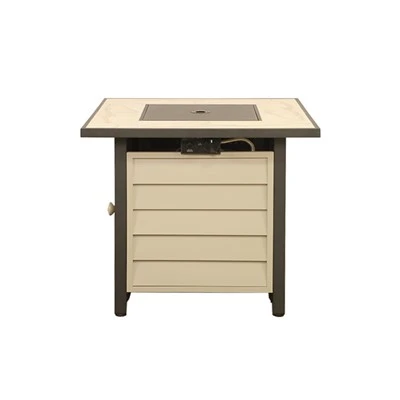
Gas models are increasingly associated with convenience, controlled flame operation, and modern outdoor living. They can also be developed in furniture-style formats, making them suitable for patios, gardens, and other outdoor living areas.
For buyers targeting the growing market for propane fire pits for decks, gas products can provide an attractive combination of outdoor heating, visual appeal, and convenient operation. However, deck applications must always be evaluated according to the specific product's installation instructions, required clearances, local fire regulations, and fuel requirements.
From a sourcing perspective, gas fire pits require closer attention to:
1) Burner design
2) Ignition system
3) Gas connections
4) Safety-related components
5) Applicable certifications
6) Spare parts and after-sales support
7) Packaging protection for functional components
Product selection insight: Wood fire pits emphasize the traditional campfire experience, while gas fire pits generally offer more opportunities for convenience-oriented and furniture-style product development.
2. Ignition: Simplicity vs. Traditional Fire-Building
Ignition affects not only the end-user experience but also product positioning and after-sales requirements.
Wood Fire Pit Ignition
A wood fire pit normally requires the user to prepare kindling and firewood before starting the fire.
This process can be part of the product's appeal. Consumers who enjoy camping, outdoor recreation, and traditional campfire experiences may see fire preparation as part of the overall experience.
For distributors, however, this also means that product descriptions and marketing materials need to communicate the traditional nature of the product clearly.
Gas Fire Pit Ignition
Gas fire pits are designed around a more controlled ignition process. Depending on the model, this may include electronic ignition, push-button ignition, or another integrated system.
For retailers, a standardized ignition system can help position the product as a convenient and modern outdoor heating solution.
At the same time, ignition components become important considerations for quality control and after-sales service. Buyers should evaluate not only how easily a product starts but also the availability of replacement components and the manufacturer's technical support.
Product selection insight: Wood ignition is part of the traditional outdoor experience, while gas ignition supports a more standardized and convenience-focused product position.
3. Maintenance: Ash Management vs. Component Maintenance
Maintenance is an important consideration for distributors because it can influence customer satisfaction, return rates, spare-parts requirements, and after-sales workload.
Wood Fire Pit Maintenance
Wood-burning fire pits generally require regular removal of ash and combustion residue.
Typical maintenance includes:
1) Removing cooled ash
2) Cleaning the fire bowl
3) Removing soot and residue
4) Checking the frame and combustion area
5) Protecting the product from excessive moisture
6) Inspecting components after repeated high-temperature use
7)For buyers, products with straightforward structures and easy-to-clean combustion areas may be easier to position in the market.
Gas Fire Pit Maintenance
Gas fire pits typically produce significantly less ash than wood-burning models, reducing one aspect of routine cleaning.
However, maintenance requirements do not disappear. Burners, ignition systems, gas connections, ventilation areas, and external surfaces still require appropriate inspection and care.
This means gas fire pit buyers should pay close attention to component quality and technical support when evaluating manufacturers.
A protective cover can also help reduce exposure to rain, dust, leaves, and other outdoor elements.
For example, a round fire pit Steel Frame with cover can combine the visual characteristics of outdoor furniture with protection during periods when the fire pit is not being used.
Product selection insight: Wood fire pits tend to require more ash-related maintenance, while gas fire pits place greater importance on the quality and serviceability of functional components.

4. User Experience and Product Positioning
From a B2B perspective, user experience is important because it determines how a product can be positioned and marketed in the target market.
Wood Fire Pit: Traditional Outdoor Experience
Wood fire pits naturally support a traditional outdoor lifestyle concept.
Their main selling points can include:
1)Authentic campfire atmosphere
2)Natural flames and glowing embers
3)Outdoor recreation
4)Camping and backyard gatherings
5)Traditional fire experience
This positioning can work well for markets where consumers value outdoor recreation and the atmosphere of a real wood fire.
Gas Fire Pit: Convenience and Modern Outdoor Living
Gas fire pits are more closely associated with convenience and controlled outdoor heating.
They can be positioned around:
1)Easy operation
2)Controlled flame
3)Modern outdoor living
4) Patio entertaining
5) Furniture-style design
6) Reduced ash cleanup
Gas products also offer opportunities for different product formats, including fire tables, compact fire pits, round models, and products with integrated covers.
A round fire pit Steel Frame with cover can therefore be positioned not only as an outdoor heating appliance but also as a functional outdoor furniture product.
Product selection insight: When building a product portfolio, buyers can use wood fire pits to target the traditional outdoor recreation segment and gas fire pits to target convenience-oriented and modern outdoor living segments.
5. Transportation and Packaging Considerations
Transportation is particularly important for distributors and wholesalers sourcing outdoor heating products internationally.
The product itself is only one part of the logistics equation. Buyers should also consider:
1) Product dimensions
2) Product weight
3) Knock-down structure
4) Packaging efficiency
5) Protection of functional components
6) Assembly requirements
7) Drop and vibration resistance
8) Spare parts packaging
9) Container loading efficiency
Wood Fire Pits
Many wood fire pits have relatively straightforward structures, but their shipping dimensions and weight can vary significantly depending on the fire bowl, frame, mesh components, and accessories.
For large models, packaging volume can become an important factor in transportation costs.
Gas Fire Pits
Gas fire pits can contain more functional components, including burners, ignition systems, valves, gas lines, decorative media, and control components.
This makes packaging design particularly important.
A product that performs well in the factory but arrives with damaged components or surface finishes can create unnecessary after-sales costs for distributors.
For international buyers, it is therefore valuable to work with manufacturers that have experience with export packaging and long-distance transportation.
At YIMO, product packaging is designed for mail-order and international transportation requirements, with packaging required to pass the ISTA-3A international drop test.
Product selection insight: For international sourcing, packaging quality and transportation protection should be evaluated together with product design and factory quality control.
6. Application Scenarios and Target Markets
Different fire pit categories are naturally suited to different outdoor applications.
| Application / Market Position | Wood Fire Pit | Gas Fire Pit |
|---|---|---|
| Traditional backyard fire experience | ★★★★★ | ★★★ |
| Camping and outdoor recreation | ★★★★★ | ★★★ |
| Large open outdoor areas | ★★★★★ | ★★★★ |
| Modern patio applications | ★★★ | ★★★★★ |
| Furniture-style outdoor products | ★★★ | ★★★★★ |
| Convenience-focused products | ★★★ | ★★★★★ |
| Products designed around controlled flames | ★★ | ★★★★★ |
| Deck-oriented applications* | ★★–★★★ | ★★★★–★★★★★ |
*Actual suitability for decks depends on the specific product, installation requirements, safety clearances, local regulations, and applicable fuel requirements.
For buyers, the key question is not necessarily whether wood or gas is universally better.
Instead, the more useful question is:
Which product category matches the outdoor living habits and regulatory environment of the target market?
For example, markets with strong camping and traditional outdoor recreation demand may provide opportunities for wood-burning products, while markets with strong patio and modern outdoor living demand may offer greater potential for gas fire pits.

7. What Should Buyers Evaluate Before Sourcing?
When comparing different fire pit suppliers, product appearance should not be the only consideration.
Material and Construction
Outdoor fire pits need to withstand heat, temperature changes, moisture, and outdoor exposure.
Common materials include cold-rolled steel, stainless steel, and aluminum. Each material provides different characteristics in terms of strength, weight, corrosion resistance, appearance, and cost.
Buyers should evaluate not only the material specification but also the frame construction and manufacturing consistency.
Surface Treatment
Surface treatment is particularly important for steel outdoor products.
A suitable finish can improve appearance and help protect the product from outdoor environmental exposure.
For distributors, consistent surface quality is also important because variations between production batches can affect product reviews and customer satisfaction.
Burner and Ignition Components
For gas fire pits, buyers should pay particular attention to:
1) Burner quality
2) Ignition reliability
3) Flame stability
4) Control system
5) Component availability
6) Replacement parts
7) Technical support
These factors can directly influence after-sales performance.
Protective Cover
A cover can add practical value to outdoor fire pit products by helping protect the product when it is not in use.
When selecting a round fire pit Steel Frame with cover, buyers should consider the fit between the cover and the main product, material durability, storage convenience, and whether the overall design supports the target retail positioning.
Packaging and Quality Control
For products sold through international distribution channels, packaging quality is part of product quality.
Buyers should consider whether the supplier has:
1)Incoming material inspection
2)Production quality control
3)Assembly inspection
4)Functional testing
5)Packaging testing
6)International certification experience
7)Spare-parts support
8)Warranty procedures
A strong manufacturing process can help reduce product damage, quality complaints, and unnecessary after-sales costs.
8. Wood or Gas? A Portfolio Approach May Be More Practical
For distributors and wholesalers, the choice between wood and gas does not always have to be an either-or decision.
A diversified outdoor heating portfolio can allow different products to serve different market segments.
For example:
Wood Fire Pit Product Line
Can focus on:
1) Traditional outdoor recreation
2) Camping
3) Large gardens
4) Backyard gatherings
5) Authentic campfire experiences
Gas Fire Pit Product Line
Can focus on:
1) Modern patios
2) Suitable deck applications
3) Outdoor entertaining
4) Furniture-style products
5) Convenience-oriented customers
6) Controlled-flame heating
This approach allows buyers to build a broader product portfolio rather than relying on a single fire pit category.
The right product mix will depend on the target country's regulations, climate, outdoor living habits, retail channel, price positioning, and customer demand.

9. Why Manufacturer Capability Matters
For distributors and wholesalers, the quality of the supplier is just as important as the product itself.
A reliable outdoor fire pit manufacturer should be able to provide consistent production, quality control, packaging protection, certification support, and responsive after-sales service.
Zhejiang YIMO Technology focuses on outdoor product R&D and manufacturing, with a 18,000-square-meter production area, integrated laser cutting, precision welding, surface treatment, assembly, and inspection capabilities, as well as OEM/ODM experience. The company currently supplies outdoor products to North America, Europe, and Australia, with CE and CSA certification experience and a monthly production capacity of approximately 30,000 pieces.
10. Final Considerations for Outdoor Product Buyers
When evaluating wood fire pits and gas fire pits, there is no single category that is suitable for every market.
Wood fire pits can be a strong choice when the target market values:
1)Traditional campfire experiences
2)Outdoor recreation
3)Camping
4) Large open outdoor spaces
5) Natural fire aesthetics
Gas fire pits can be a strong choice when the target market values:
1)Convenience
2)Controlled flame operation
3)Modern outdoor living
4)Patio and suitable deck applications
5)Furniture-style product design
6)Reduced ash-related maintenance
For distributors and wholesalers, the most effective sourcing strategy is to evaluate the complete product proposition rather than fuel type alone.
Consider fuel, ignition, maintenance, user experience, transportation, packaging, application scenarios, certifications, quality control, and after-sales support as one integrated product-selection framework.
The goal is not simply to find a fire pit that looks attractive.
The goal is to select a product that is appropriate for the target market, practical to distribute, reliable in use, efficient to transport, and supported by a capable manufacturing partner.
For outdoor product buyers, that is the foundation of a sustainable fire pit product portfolio.