


What kind of ventilation is required for a modern square gas fire pit?
As a supplier of Modern Square Gas Fire Pits, I've encountered numerous inquiries regarding the ventilation requirements for these popular outdoor heating solutions. Ventilation is a critical aspect that ensures the safe and efficient operation of gas fire pits. In this blog, I'll delve into the types of ventilation needed for modern square gas fire pits, the reasons behind them, and how they contribute to a better user experience.
Why Ventilation is Essential for Gas Fire Pits
Gas fire pits operate by burning natural gas or propane. When these fuels are burned, they produce carbon monoxide (CO), a colorless, odorless, and highly toxic gas. Without proper ventilation, carbon monoxide can accumulate in the surrounding area, posing a serious health risk to anyone nearby. In addition to carbon monoxide, the combustion process also produces water vapor and other by - products that need to be dispersed to prevent moisture buildup and potential damage to the fire pit and the surrounding environment.
Types of Ventilation for Modern Square Gas Fire Pits
Natural Ventilation
Natural ventilation is the most basic form of ventilation for gas fire pits. It relies on the natural movement of air to carry away the combustion by - products. For a modern square gas fire pit, natural ventilation can be achieved through the design of the fire pit itself. Many square gas fire pits have openings at the bottom or sides that allow fresh air to enter and hot air and combustion by - products to exit.
For example, a 30 Inch Wicker Gas Fire Pit often has ventilation holes at the base. These holes allow air to flow in, providing the oxygen needed for combustion. As the hot air rises, it carries the carbon monoxide and other by - products out of the fire pit. The wicker design also allows for some air circulation around the fire pit, further enhancing natural ventilation.

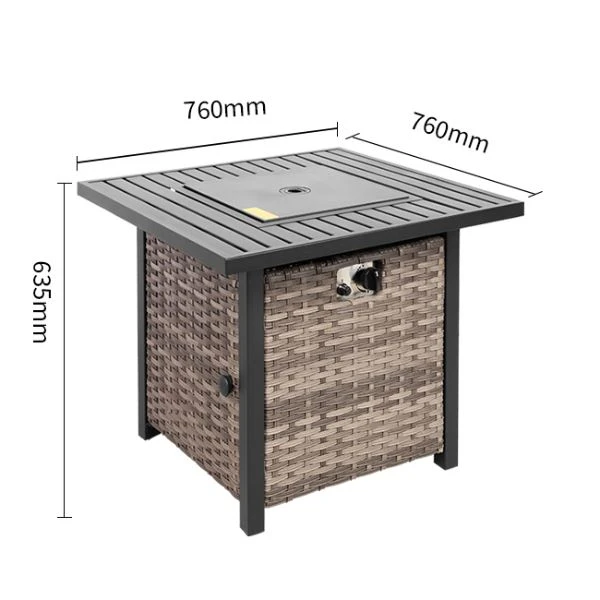
However, natural ventilation has its limitations. It is highly dependent on external factors such as wind speed and direction. On calm days, the air movement may be insufficient to effectively remove the combustion by - products, increasing the risk of carbon monoxide buildup.
Forced Ventilation
Forced ventilation is a more reliable option, especially in areas where natural ventilation is not sufficient. This type of ventilation uses fans or blowers to actively move air in and out of the fire pit. Forced ventilation systems can be built into the fire pit or added as an accessory.
In a Square Gas Fire Pit with Stones, a forced ventilation system can be installed to ensure a constant flow of fresh air. The fan or blower can be set to a specific speed to control the amount of air entering and exiting the fire pit. This helps to maintain a consistent combustion process and effectively remove carbon monoxide and other by - products.
Forced ventilation also offers the advantage of being able to operate in a wider range of environmental conditions. It can work effectively even on calm days or in enclosed spaces where natural ventilation is limited.
Ventilation Requirements for Different Installation Environments
Outdoor Installation
When installing a modern square gas fire pit outdoors, natural ventilation is usually sufficient in most cases. The open air allows for easy dispersion of combustion by - products. However, it's important to ensure that the fire pit is placed in an area with good air circulation. Avoid placing the fire pit in a corner or against a wall, as this can restrict the flow of air.
If you live in an area with low wind speeds or if you plan to use the fire pit in an enclosed patio or gazebo, forced ventilation may be necessary. This will help to prevent the buildup of carbon monoxide and ensure a safe and comfortable environment.
Indoor Installation
Installing a gas fire pit indoors requires more careful consideration of ventilation. Natural ventilation is often not enough in indoor spaces, as the air movement is more restricted. Forced ventilation is highly recommended for indoor installations.
A White Propane Fire Pit installed indoors should be connected to a proper ventilation system. This can be a dedicated exhaust duct that leads outside, or a ventilation unit that is specifically designed for indoor gas appliances. The ventilation system should be sized appropriately to handle the volume of combustion by - products produced by the fire pit.
Maintenance of Ventilation Systems
Proper maintenance of the ventilation system is crucial for the safe and efficient operation of the gas fire pit. For natural ventilation, regularly check the ventilation openings to ensure they are not blocked by debris such as leaves, dirt, or insects. Clean the openings as needed to maintain good air flow.
For forced ventilation systems, follow the manufacturer's instructions for maintenance. This may include cleaning or replacing the filters, checking the fan or blower for proper operation, and inspecting the ventilation ducts for any damage or blockages.
Conclusion
In conclusion, ventilation is a vital aspect of using a modern square gas fire pit. Whether you choose natural or forced ventilation, it's important to ensure that the fire pit is properly ventilated to prevent the buildup of carbon monoxide and other harmful by - products. By understanding the different types of ventilation and their requirements, you can enjoy the warmth and ambiance of your gas fire pit safely.
If you're interested in purchasing a modern square gas fire pit or have any questions about ventilation requirements, please feel free to contact us for more information and to discuss your specific needs. We're here to help you make the right choice for your outdoor or indoor space.
References
- "Gas Fire Pit Safety Guidelines" - National Fire Protection Association
- "Ventilation Requirements for Gas Appliances" - American Gas Association


